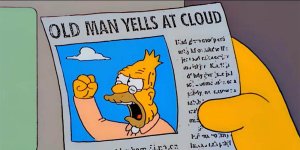
I suppose it just depends on your point of reference? Are we comparing the current circumstances against what time period? Last year, 5 years? 10 years? Longer?
Being young and wanting to enter the sport in any era, how was the cost to get started compared to now? Would a 20 something walk down to the local dealer and get themselves a nice 600 SS to ride home and look up when the next track day is and get started?
From my armchair analysis, there is ALOT of things competing for our dollars present day. We have more lifestyle material things to choose from as well as just simple living expenses and choices.
When you look at where your dollars go and everything competing to grab your attention to spend it, it’s a wonder. Lots of stuff comes and goes.
Being young, out of university, finding a job, finding a place to live, finding a mode of transportation, affording gas station sushi and the latest game console. The bank of parents are supporting their own aging parents and trying to get their own kids to be independent.
Swipe right, started a relationship, move in together and save some housing costs but, the career ladder isn’t moving as projected. The dreams of a SS are far off. Find a 10 year old CBR600 and getting it insured turns out to be expensive. The car dealership warns you against using your leased Civic to tow a trailer will void your warranty. Renting a van from HD, they won’t insure you for being too young. I think you get the idea.
So it must be the greedy business sucking the money out of us.
How many times have we witnessed various tracks open, flounder, go into disrepair and go under?
Same for independent shops.
I would argue anything you do comes at a financial cost. Is it worth it? If the answer is no, find something that is.
Rent a Vespa in Portugal on holiday and head south. It might not be tracking a SS but, it might be fun and worth your time. And isn’t that winning enough? Go ahead and insert your own idea of cheap thrills for mega smiles.
As an aside, I used to GoKart at a young age. Parents supported me and took me places. Then the paddock started to get packed with large trucks and trailers with the latest and greatest and most speaking a foreign language. (Those darn Quebecers!). I didn’t fit in any more and it got too serious for this teenager. I don’t miss it for one bit.
Heck, I listen to my friends that are teachers and have kids in hockey cry and moan about the cost of hockey. I don’t think they do hand me down shin pads or skates from play it again and pretty sure they don’t skip the Starbucks on the way to practice.

You make solid observations about how life today pulls young riders in a thousand directions, but that’s
exactly why the industry is shrinking—not because people suddenly stopped liking motorcycles, but because the gap between “wanting to ride” and “being able to ride” has never been wider.
Older riders have dreams—and we can finally live them.
We worked hard, built careers, gained skills, and now have the means to buy the machines we used to drool over in magazines. There’s nothing wrong with that. In fact, good for us. We
should enjoy the payoff.
But let’s not confuse our ability to chase our dreams with the health of the sport.
Our demographic is not growing the industry—we’re just propping it up for a few more years.
The industry is getting smaller. Full stop.
Dealers closing. Fewer new riders. Higher barriers to entry.
This isn’t nostalgia—it’s math.
Are modern bikes “better”?
Depends on your reference point.
- Compared to last year? Maybe not.
- Compared to five years ago? Debatable.
- Compared to 10–20 years ago? Depends on whether your priority is riding or being managed by electronics.
Does a 2025 bike
objectively outperform a 2005 bike? Sure, spec-sheet wise.
Is it more fun, more accessible, or more affordable? That’s a lot more subjective.
The cost-to-entry gap is the killer.
Take your example: would a 20-something walk into a dealer, buy a 600 supersport, and start hitting track days?
Decades ago: absolutely.
Today: not a hope in hell.
Here’s their reality:
- Living costs are brutal.
- Insurance is brutal.
- A new 600 costs what a middle-class car used to cost.
- Used bikes are cheaper, yes—but insuring one as a young rider is a blood sacrifice.
- Even finding a place to live eats all their disposable income.
Add in a generation raised on screens, subscription services, gig work, and financial instability, and yeah—motorcycling becomes a dream, not a decision.
And we haven’t even touched the
dealer ecosystem, parts pricing, service costs, and distributor profit margins that make the barrier even higher.
Shops don’t disappear because riding isn’t fun.
They disappear because the ecosystem can’t sustain itself.
It’s not just “everything costs money.”
It’s that everything costs
more, delivers
less, and leans on an aging population to keep the lights on.
Your examples of other hobbies actually prove the point.
Karting got too serious.
Hockey got too expensive.
Same story: the activity didn’t die—
access died.
Motorcycling is heading down the same path unless something changes.
The bottom line?
Older riders like us are living the dream. Great. Let's promote it.
But are we the last big wave.
The sport isn’t feeding the next generation—it’s pricing them out, drowning them in tech they don’t need, and offering fewer places to ride, service, or even buy a bike.
If we’re honest, that’s the piece everyone keeps glossing over:
the industry isn’t adapting to modern realities—it’s just shifting the cost onto a shrinking group of aging riders.
And eventually, that well runs dry.









 , articles like the following cause me some reflection on any recent close(ish) calls.