
Agreed. After building my garage the Squeeze and I sided it. Looks fine, even if you look pretty close. Thought "that was easy" and then wrapped our shed as well.It’s a reasonable DIY project, no especially tools or skills required. Just follow best practices and don’t take shortcuts.
Tools: string line or laser level, 4’ level, hammer, skill or chop saw.
Remove existing siding.
Labor costs can exceed material cost, so there is a big savings in DIY.
- Repair any deteriorated sheeting and house wrap, if no house wrap exists, add it now.
- Blue skin around windows and door openings, tape seams.
- If you want extra insulation, add rigid foam over housewrap.
- Tape and seal seams.
- Vertically strap for better ventilation and moisture protection
- Nail up siding following manufacturer installation guide ( seams, fastener placement and tightness, corners)







You are using an out of date browser. It may not display this or other websites correctly.
You should upgrade or use an alternative browser.
You should upgrade or use an alternative browser.
Enough of COVID...what are you doing to the house?
- Thread starter mimico_polak
- Start date
Excuse me? In Toronto contractors hire unskilled labourers, give them a days training and turn them loose on other people's houses. Their interests in the project end with the cheque being cashed.4k for eaves, soffits and facia including repairs to previous work.
This is just for the back of the house 2 straight sections of maybe 70ft total and 3 downspouts.
Siding was 29k for aluminum and 1" foam insulation. We need it done but don't have 29k and don't want to replace junk with new junk..
I know nothing on how to this and I'm not willing to learn on my house, plus none of the proper tools for the metal work. I'll stick to working my property

Mad Mike
Well-known member
Siding, soffits, roofing and landscaping are all unskilled labor. That doesn’t mean the people doing the job lack the necessary skills or experience, it means they aren't certified in any trade.Excuse me? In Toronto contractors hire unskilled labourers, give them a days training and turn them loose on other people's houses. Their interests in the project end with the cheque being cashed.
Worker skills aren’t usually the problem, bad work is usually due to poor job supervision and oversight.
Siding, soffits, roofing and landscaping are all unskilled labor. That doesn’t mean the people doing the job lack the necessary skills or experience, it means they aren't certified in any trade.
Worker skills aren’t usually the problem, bad work is usually due to poor job supervision and oversight.
I have no doubt I could manage putting up siding but I also have no doubt that I would cack up flashing and trim at corners edges and windows.

That's my concern as wellI have no doubt I could manage putting up siding but I also have no doubt that I would cack up flashing and trim at corners edges and windows.
Exactly. 'Unskilled labour' just means that it's not a certified trade but a basic knowledge of the work is required to not totally screw up a job (whether for oneself or a customer).Siding, soffits, roofing and landscaping are all unskilled labor. That doesn’t mean the people doing the job lack the necessary skills or experience, it means they aren't certified in any trade.
Worker skills aren’t usually the problem, bad work is usually due to poor job supervision and oversight.
The quality of the labour is also commonly inversely proportional to demand. When the renovation/building industry has more work than capacity they tend to slap in warm bodies, specially at the lower end of the skill set tasks like siding, etc. If things are slow, most will keep their good guys and dump the hacks.
On many things DIY I always say, a pro hopefully can do it better but if I can do it good enough I will have at it. At the same time if I paid someone and got my good enough quality level I would be ******, more times than not that is what I would get--maybe worse....
On many things DIY I always say, a pro hopefully can do it better but if I can do it good enough I will have at it. At the same time if I paid someone and got my good enough quality level I would be ******, more times than not that is what I would get--maybe worse....
It could also mean they don't have the skills or experience.Siding, soffits, roofing and landscaping are all unskilled labor. That doesn’t mean the people doing the job lack the necessary skills or experience, it means they aren't certified in any trade.
Worker skills aren’t usually the problem, bad work is usually due to poor job supervision and oversight.
No worries. Sidiing is like a big lego set. There's starter strips for the bottom. Special inside and outside corner pieces. J moulding for around windows and doors. And like lego you snap the pieces in before nailing - the trick is not to sink the nails all the way home. Siding will expand and contract thru the seasons and if you constrict it by driving the nails tight it can buckle in the summer heat.That's my concern as well
Mad Mike
Well-known member
It could, but it usually doesn’t. Workers will take shortcuts, supervisors and leads on the job should check workmanship to be sure best practices are followed.It could also mean they don't have the skills or experience.
Not saying crap contractors aren’t out there- they are - and they do produce bad outcomes.
I’m in the biz, can’t count the times I’ve had them rip out and repair shoddy work.
Mad Mike
Well-known member
Typical mistakes/cheats:No worries. Sidiing is like a big lego set. There's starter strips for the bottom. Special inside and outside corner pieces. J moulding for around windows and doors. And like lego you snap the pieces in before nailing - the trick is not to sink the nails all the way home. Siding will expand and contract thru the seasons and if you constrict it by driving the nails tight it can buckle in the summer heat.
Using 1/8 ply strips as the starter. Doesn’t vent, rots in a few years.
Randomizing joints. Novices may start with a full strip on every row, or every other row
Reverse tuckin corners on 2 story houses. Causes water to get behind siding
Tight nailing, short nailing, tight fitting to corner channels. Causes wavy or loose pieces
No kick out flashing at roof. I see this a lot.
No backflashinv of hardy or wood butt joints. Causes water leaks.
No strapping. Reduces ventilation. Can rot sheathing.
Incomplete housewrap under siding.
Poorly installed drip flashing at windows and doors.
None of these are ‘skill’ things. They are shortcuts with catastrophic consequences.
Well said and all things I had to be careful with my dad.Typical mistakes/cheats:
Using 1/8 ply strips as the starter. Doesn’t vent, rots in a few years.
Randomizing joints. Novices may start with a full strip on every row, or every other row
Reverse tuckin corners on 2 story houses. Causes water to get behind siding
Tight nailing, short nailing, tight fitting to corner channels. Causes wavy or loose pieces
No kick out flashing at roof. I see this a lot.
No backflashinv of hardy or wood butt joints. Causes water leaks.
No strapping. Reduces ventilation. Can rot sheathing.
Incomplete housewrap under siding.
Poorly installed drip flashing at windows and doors.
None of these are ‘skill’ things. They are shortcuts with catastrophic consequences.
He liked to do some shortcuts that he’s done before and I basically ripped off any boards that didn’t properly set.
Now…I was militant and WAY overdid it….but as I said before, I’m extremely proud of the results and how it came out.
Need to redo some flashing….but it’s a minor issue.
I swear I’ll finish that brick veneer mortar this season….
The problem is naïve clients. No inspections for roofing or siding. Ten years later the shortcuts have become a six figure fix.It could, but it usually doesn’t. Workers will take shortcuts, supervisors and leads on the job should check workmanship to be sure best practices are followed.
Not saying crap contractors aren’t out there- they are - and they do produce bad outcomes.
I’m in the biz, can’t count the times I’ve had them rip out and repair shoddy work.
The ONLY reason I do my higher up roof is because I’m scared of heights.The problem is naïve clients. No inspections for roofing or siding. Ten years later the shortcuts have become a six figure fix.
I have a side split same as you, and those first few rows terrify me.
If it wasn’t for tjay. I’d do my damn roof myself as it’s coming up for replacement.
Unless my friends agree to 1.5….but over many tequilas in MX currently….they’re holding to their 1.6.
I think my wife was bored last night...
'So...I think we should make the living room a bit more open concept'
'OK. But there's a chimney in the middle of the house from roof to basement'
'It's just bricks. Can't you take it out brick by brick? We'd have so much more open space in the living / dining area!'
'Uh.........that's probably structural'
'Probably not'
'The neighbours did it and their ceiling is sagging/leaking'
'Ya...but they're dumb, you can do this right?'
I can see where this is going...
'So...I think we should make the living room a bit more open concept'
'OK. But there's a chimney in the middle of the house from roof to basement'
'It's just bricks. Can't you take it out brick by brick? We'd have so much more open space in the living / dining area!'
'Uh.........that's probably structural'
'Probably not'
'The neighbours did it and their ceiling is sagging/leaking'
'Ya...but they're dumb, you can do this right?'
I can see where this is going...

It is a lot of sq ft used up with minimal plus side. How the floors are tied in to chimney will be interesting. I cam think of a few solutions bridge the hole but I have no idea which is the best not which would cause me code issues. While I dislike that permits are used as a profit centre, I would probably get one for that. Too easy for insurance/future buyers to make you liable. It shouldn't increase your taxes as house value shouldn't change.I think my wife was bored last night...
'So...I think we should make the living room a bit more open concept'
'OK. But there's a chimney in the middle of the house from roof to basement'
'It's just bricks. Can't you take it out brick by brick? We'd have so much more open space in the living / dining area!'
'Uh.........that's probably structural'
'Probably not'
'The neighbours did it and their ceiling is sagging/leaking'
'Ya...but they're dumb, you can do this right?'
I can see where this is going...
100% would requiest a structural inspection / review before I touch anything.It is a lot of sq ft used up with minimal plus side. How the floors are tied in to chimney will be interesting. I cam think of a few solutions bridge the hole but I have no idea which is the best not which would cause me code issues. While I dislike that permits are used as a profit centre, I would probably get one for that. Too easy for insurance/future buyers to make you liable. It shouldn't increase your taxes as house value shouldn't change.
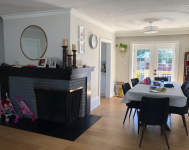
I'd say it's maybe...50-100sqft that would open up, but it's a massive difference if taken out properly.
One concern is how to support the ceiling when that whole corner is taken out.
Once it warms up I'll go up into the attic and see what's connected how.
Next time you're in the area pop by and we can take a look in more detail.
Hell if I could find a framer / designer for 150k or so just to remove the roof, and frame me a second story and enclose it...I can do the rest. But that price is a pipe dream in today's day and age, and I don't have the skills / speed to rip off a roof, frame, and enclose it in a timely manner.
Looking for a spot in our backyard for the above ground 14ft pool to go up this year and there aren't any 'great' spots but I think I found a spot I can securely place, and fence off easier than other spots around the yard. Plus this spot has the most sunlight in the yard which always helps.
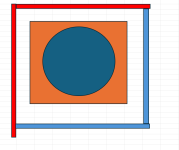
Red - existing fence
Blue Lines - need to install to protect from kids accessing when we're not around
Orange - decision between digging down and leveling out, or installing a few 4x4s and then placing sand / gravel to level it out. Want to keep it as close to the size of the pool to prevent kids from walking on it and it's only needed to level out the pool
Blue Circle - I'm sure it's obvious
I have a used filter I got for free, and now looking for a 0.75-1HP pump for the pool.
Pool is approx 48" tall so good enough for now. This setup would also allow me to keep the trampoline beside it and not overwhelm the whole yard to make it still usable.
Thoughts on the orange? If I'm going to dig down I'll need to start soon.
Next question....
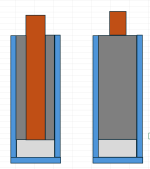
Best way to place new 6x6 posts for the fence?
Option #1 - dig down 4ft, gravel, post IN concrete
Option #2 - dig down 4ft, gravel, concrete, post ATOP the concrete
Thoughts?
Red - existing fence
Blue Lines - need to install to protect from kids accessing when we're not around
Orange - decision between digging down and leveling out, or installing a few 4x4s and then placing sand / gravel to level it out. Want to keep it as close to the size of the pool to prevent kids from walking on it and it's only needed to level out the pool
Blue Circle - I'm sure it's obvious
I have a used filter I got for free, and now looking for a 0.75-1HP pump for the pool.
Pool is approx 48" tall so good enough for now. This setup would also allow me to keep the trampoline beside it and not overwhelm the whole yard to make it still usable.
Thoughts on the orange? If I'm going to dig down I'll need to start soon.
Next question....
Best way to place new 6x6 posts for the fence?
Option #1 - dig down 4ft, gravel, post IN concrete
Option #2 - dig down 4ft, gravel, concrete, post ATOP the concrete
Thoughts?

Unless you use sona tubes on top is the only choice. If you pour concrete in the hole without a sona tube the frost will heave it out of the ground.Looking for a spot in our backyard for the above ground 14ft pool to go up this year and there aren't any 'great' spots but I think I found a spot I can securely place, and fence off easier than other spots around the yard. Plus this spot has the most sunlight in the yard which always helps.
View attachment 77996
Red - existing fence
Blue Lines - need to install to protect from kids accessing when we're not around
Orange - decision between digging down and leveling out, or installing a few 4x4s and then placing sand / gravel to level it out. Want to keep it as close to the size of the pool to prevent kids from walking on it and it's only needed to level out the pool
Blue Circle - I'm sure it's obvious
I have a used filter I got for free, and now looking for a 0.75-1HP pump for the pool.
Pool is approx 48" tall so good enough for now. This setup would also allow me to keep the trampoline beside it and not overwhelm the whole yard to make it still usable.
Thoughts on the orange? If I'm going to dig down I'll need to start soon.
Next question....
Best way to place new 6x6 posts for the fence?
Option #1 - dig down 4ft, gravel, post IN concrete
Option #2 - dig down 4ft, gravel, concrete, post ATOP the concrete
Thoughts?
View attachment 77997
Sent from my Pixel 5 using Tapatalk




