Stocks

If a family member works for a company that gives out preferentially priced shares can that family member sign over some of those shares to someone else?

I'd like to give my brother some cash in exchange for shares in the company he works for at the discounted rate.
 
If a family member works for a company that gives out preferentially priced shares can that family member sign over some of those shares to someone else?

I'd like to give my brother some cash in exchange for shares in the company he works for at the discounted rate.
That's a private contract. It could say anything. Typically, the employee has to hold for a period of time otherwise the discount gets reversed. Once they are pulled from the company controlled plan and placed in your personal account, you are free to do whatever you want with them.

Realistically, although it's likely in violation of the agreement, if family member wasn't maxing plan, you could give them X dollars for y shares. They buy them now and transfer to you after the lockup (probably 6-24 months). This will trigger a capital gains tax owed by the family member in the year you get the shares. For tax purposes, I suspect the shares are a gift to you.

I don't think I'd want to be a part of this. Really messy and you could enrage CRA and their employer.
 
Last edited:
That's a private contract. It could day anything. Typically, the employee has to hold for a period of time otherwise the discount gets reversed. Once they are pulled from the company controlled plan and placed in your personal al account, you are free to do whatever you want with them.

Realistically, although it's likely in violation of the agreement, if family member wasn't maxing plan, ypu could give them X dollars for y shares. They buy them now and transfer to you after the lockup (probably 6-24 months). This will trigger a capital gains tax owed by the family member in the year you get the shares. For tax purposes, I suspect the shares are a gift to you.

I don't think I'd want to be a part of this. Really messy and you could enrage CRA and their employer.

Hmm. Just to make things a little more complex these would be shares from a British company listed in GBP. Currently running at over $3k CDN per share once converted.
 
Hmm. Just to make things a little more complex these would be shares from a British company listed in GBP. Currently running at over $3k CDN per share once converted.
Share price doesn't matter. Contract matters a lot. I have no idea about capital gains/gifts across borders.
 
When can you trust past returns as an predictor of future results? Over the past 15 years, in my RRSP, I have been getting an annualized return of between 26 and 27% (some good years, some bad, this is the compounded average and includes the growth due to inflation). Over the last five years where I used a better tracker, XIRR of all of my investment accounts combined is in the same range. That's works out to investments tripling every 4-5 years. Obviously the safe approach is to wait until the size of the warchest is ~25x the perpetual earnings I want. That would have me working for more years when I could be enjoying life though. Also, I'm getting older and fatter. Ditching work would give me more time to ride bikes (power and motor). That should extend my healthy life.

I don't plan on taking my foot off the gas in the portfolio. If a year sucks in the markets, I am ok with taking a poverty year where I withdraw as little as possible. Sadly, many years left on mortgage so that is a significant cash burn that is unavoidable. If I don't screw it up, I can do whatever I want and set the kids up (if I want to and they prove worthy).

I guess the smart strategy would be semi-retirement but that isn't ideal as my corporate expenses would remain so a decent amount of work would be lost to covering expenses.

When I think I am in a good enough spot, I'll fork out for one of the fee for service advisors to see if they can flag major problems with my plan. $4000 to avoid a landmine is a great value.
 
This run is crazy. I'm cleaning up some past missteps. Long ago I bought etrade in my tfsa which was then purchased by Morgan Stanley which gave dividends. US steals 15% of the dividends in TFSA so I liquidated that and bought a fund that holds physical gold so it tracks the price of gold almost exactly. Yes, gold is high right now. I had no precious metals exposure. Now I have about 5% exposure. If the market takes a dump, it should do well. If the market continues to climb, I probably miss out on some gains but I should be reasonably safe as a substantial pullback on gold is unusual (but not impossible). I should have done this earlier for so many reasons but MS was returning reasonably well and I was lazy.
 
I made more on investments than I made on my business income this year. Significant enough to live comfortably in retirement, though that's not the way you do it. I was surprised to have to drop Qualcomm this fall, but it was just under-performing. Invested in Brookfield, they're clearly becoming the aggressive umbrella company of the world, for better or worse.
 
I made more on investments than I made on my business income this year. Significant enough to live comfortably in retirement, though that's not the way you do it. I was surprised to have to drop Qualcomm this fall, but it was just under-performing. Invested in Brookfield, they're clearly becoming the aggressive umbrella company of the world, for better or worse.
Same here. We made more in the last 2 years on investments than our salaries. RRSP's alone are up 42% in the last 24 months. TFSA's up about 30%. Non registered about 25%. How long can this keep going? Wouldn't we all like to know!
 
Overweight on RRSPs by quite a margin.

Need to do some heavy mathing to figure out the most tax-efficient way to get that money into my grubby, non-registered hands.

After 71, no witholding tax on RRIF income? But net net, it's still the same as RSP withdrawals before 71 when all the income tax has been tabulated in April?

So really, the only benefit of waiting till after 71 is you don't give the guv'mint an interest-free loan for part of the year (plus tax-free compounding the later it stays in registered accounts, of course)? Am I reading this right?
 
Overweight on RRSPs by quite a margin.

Need to do some heavy mathing to figure out the most tax-efficient way to get that money into my grubby, non-registered hands.

After 71, no witholding tax on RRIF income? But net net, it's still the same as RSP withdrawals before 71 when all the income tax has been tabulated in April?

So really, the only benefit of waiting till after 71 is you don't give the guv'mint an interest-free loan for part of the year (plus tax-free compounding the later it stays in registered accounts, of course)? Am I reading this right?
Partly. Pretty sure you can pull from rif with no withholding tax earlier than 71. That only applies to something like the first 10K iirc. If you do draws at the end of a calendar year, you can get your refund pretty quickly.

If you want to make the map yourself, you can pay adviice $50 a year to access a decent planning site that suggests strategies, looks at all sources of income, suggests which accounts to pull from, etc. It also let's you compare scenarios and see things like total tax, total income, estate value, etc which can vary greatly from the same starting point. It also shows you beat and worst case scenarios based on historical returns. Other advisors use the same platform (it may be planeasy but im not sure if they are the provider or just another user).

If you want to pay someone to make your plan, there are a few fee only financial planners in BC that I like. Cost is ~$4000. Considering that they can save hundreds of thousands in tax, that is a great investment. Once I have my diy plan done, I will engage them as a sanity check.
 
If anyone is looking for a better CPP estimate, PWL Capital has a calculator that is substantially better than the one provided by the MyServiceCanada (which is sad but expected). MSC calculator assumes you keep working and doesn't properly account for dropout years. MSC predicts 36% high for me which could be a major deal if CPP was a major part of the plan. Now, I have more dropout years than most but still, it should at the very least have a flashing red light that based on my contribution history the MSC estimate is useless (and even worse, it overpredicted which is far worse than an incorrect underprediction). Someone like @Lightcycle with an atypical employment history is also likely to get bad data from MSC.

I put in $36K, my employers put in $36K. In the best case scenario, I leave the investment alone for almost 35 years and before starting to draw and get back double what was put in. Ouch. That is horrific ROI (under 2% on invested capital).

Screenshot-2025-10-23-150256.png


You can grab the data you need for the calculator from MSC.


EDIT:
Calculator does not look at survivor benefits. That's a downside of the current iteration. If you are close to max CPP, survivor benefit will be close enough to zero as to be immaterial.
 
Last edited:
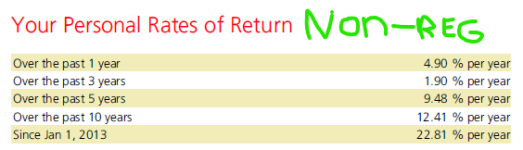
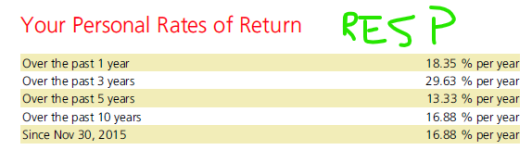
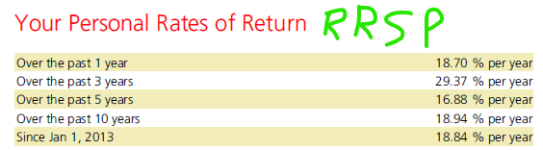
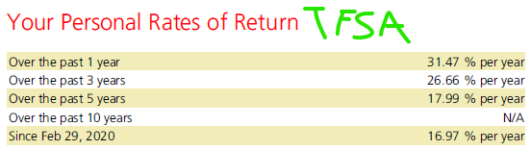
Annual update. I finally input everything into a sheet that tracks cumulative performance across all accounts and extends back quite a while. Not quite all the way back to when I started self-directed investing as I restarted tracking when I met my wife and the brokerage I used before no longer exists. That sheet also allows me to calculate metrics to help me see if I am taking insane risk. Drawdowns that are painful in the moment become immaterial when you zoom out.

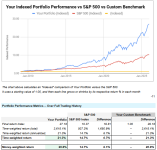
Average over the last 17 years: Return 21%, SD:17%, Sharpe:1.2, Sortino:3.3, Calmar:1.8. Max draw down was 20% (looking at monthly data, spreadsheet doesn't track daily data). Better than I expected as I haven't calculated them until now. S&P500 beat me three out of 17 years. In those years, it beat me by 6% on average. On the years I beat S&P, I was ahead by 11% on average.

I made maybe a dozen trades in 2025. Reducing some concentrated positions in favor of diversity. Bought some gold and silver which I've never had before (~5% of investable assets). I turned off some drip's to extract more to pay down investment loan so more capital is available when the inevitable correction happens (at that point metal will be liquidated to buy equities, I don't want it long term). I was waiting for 20% drop in April and it didn't get there. Lesson learned, average in on the way down. It's scary with borrowed money.

I bought gold in october and sold it in december after a 10% bump. Moved money out of TFSA as imo, metals are playing with fire and I don't want to risk a big drop inside tfsa. Bought gold and silver at xmas. Sold 25% of silver and bought gold when silver was up 33% and another 25% when it was over 50% gain. That will shield me from a 66% drop in silver which is entirely possible. I'll let the rest ride and see what happens. Putting it in a taxable account will cost me some tax that would have been avoided in tfsa. Without the benefit of hindsight, there is no way to know the best path. Outside TFSA also avoids CRA issues as they refuse to detail what level of activity is allowable in a tfsa. High frequency trading is a clear fail, buy and hold is a clear pass. There is a giant gap between those two positions that is undefined. Would weekly or monthly trades get hammered? Nobody knows (including CRA).

 

Attachments

  • non-reg.png
    non-reg.png
    23.9 KB · Views: 12
  • resp.png
    resp.png
    22.6 KB · Views: 10
  • rrsp.png
    rrsp.png
    22.9 KB · Views: 9
  • tfsa.png
    tfsa.png
    20.9 KB · Views: 12
  • Screenshot 2026-01-07 181125.png
    Screenshot 2026-01-07 181125.png
    53.9 KB · Views: 12
Last edited:
Annual update. I finally input everything into a sheet that tracks cumulative performance across all accounts and extends back to quite a while. Not quite all the way back to when I started self-directed investing as I restarted tracking when I met my wife and the brokerage I used before no longer exists. That sheet also allows me to calculate metrics to help me see if I am taking insane risk. Drawdowns that are painful in the moment become immaterial when you zoom out.

Average over the last 17 years: Return 21%, SD:17%, Sharpe:1.2, Sortino:3.3, Calmar:1.8. Max draw down was 20% (looking at monthly data, spreadsheet doesn't track daily data). Better than I expected as I haven't calculated them until now. S&P500 beat me three out of 17 years. In those years, it beat me by 6% on average. On the years I beat S&P, I was ahead by 11% on average.

I made maybe a dozen trades in 2025. Reducing some concentrated positions in favor of diversity. Bought some gold and silver which I've never had before (~5% of investable assets). I turned off some drip's to extract more to pay down investment loan so more capital is available when the inevitable correction happens (at that point metal will be liquidated to buy equities, I don't want it long term). I was waiting for 20% drop in April and it didn't get there. Lesson learned, average in on the way down. It's scary with borrowed money.

I bought gold in october and sold it in december after a 10% bump. Moved money out of TFSA as imo, metals are playing with fire and I don't want to risk a big drop inside tfsa. Bought gold and silver at xmas. Sold 25% of silver and bought gold when silver was up 33% and another 25% when it was over 50% gain. That will shield me from a 66% drop in silver which is entirely possible. I'll let the rest ride and see what happens. Putting it in a taxable account will cost me some tax that would have been avoided in tfsa. Without the benefit of hindsight, there is no way to know the best path. Outside TFSA also avoids CRA issues as they refuse to detail what level of activity is allowable in a tfsa. High frequency trading is a clear fail, buy and hold is a clear pass. There is a giant gap between those two positions that is undefined. Would weekly or monthly trades get hammered? Nobody knows (including CRA).

Impressive. Congrats and f.... Oh no that is for Reddit.

Bad jokes aside. Nice analysis. Congrats. Do you have plans to go down the FIRE?
 
Impressive. Congrats and f.... Oh no that is for Reddit.

Bad jokes aside. Nice analysis. Congrats. Do you have plans to go down the FIRE?
Maybe. I want flexibility in life. Ideally also more cash flow. If I could maintain this rate of return, I could retire very soon. Past performance is not a guarantee of future results though. Decades more mortgage payments mean I need to be sure I don't get smoked by sequence of returns risk as I have limited ability to cut back spending.

EDIT:
Realistically, I'm probably going to wait for 2 or 3x current pool of money and build a cash equivalent pool of 3x yearly income needs. That's possible by 50. It mostly depends on how the inevitable correction plays out. A pull back with a decent size investment when down and a rapid recovery can make a huge difference. If the markets stagnate, my experience/knowledge may not be very helpful to capitalize on the suck. Currently, dividends make up less than 10% of my typical returns and are not remotely enough to support me financially.

When I "retire", I will probably do something with crap pay but interesting like teaching kids to ski. I considered doing it now but they want more time commitment than I can give them with my other commitments.
 
Last edited:
I dont look at investments often , I pay the guy at RBC to look at it. Its been very nice for the last three years. I plan on retiring in March, I dont want my epitaph on my tombstone to read , Pete wishes he sold another lift of 2x4's . I plan to spend more time being engaged with the portfolio when I'm retired , but for me having a "guy" devote time to it while I was busy making money in an area I know something about has been great,

I had a plan to retire early the old fashioned way , inheirt a bagfull , but none of the eldery relatives seem to have been in on my plan. They are all in good health......
 
Back
Top Bottom