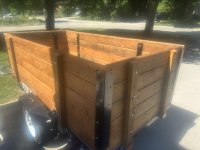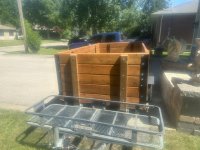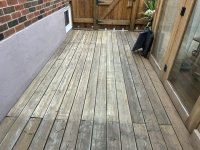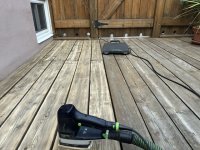







Enough of COVID...what are you doing to the house?

It powered a water pump at a one room school house where my grandma taught for decades . The school was originally at the rear gates to Kelso conservation area , was then dismantled and moved to the then Ontario agricultural museum , that was shuttered and became Heritage park . You can see the school house , stone building from the Four O One . Granny was the last teacher when the school was amalgamated with a big public school in the late sixties . Since everyone in the family had apparently worked with this engine we kept it for fun . My plan was to put it in a wooden row boat , but that idea is number six hundred and forty two on the list .


Sent from my iPhone using GTAMotorcycle.com mobile app
The first boat I made as a teenager was an eight foot punt made from one sheet of plywood and scavenged crate lumber. It was powered by a cast iron cement mixer motor driving paddle wheels, no fenders.

The occupants got wetter than the bottom of the boat. I love those old farm hit and miss engines as well.
 
How would one diagnose a very low power mower? I’m out of ideas.
Three things are necessary: compression, spark and fuel.

1, check spark by pulling the plug, check gap (exactly the same as a credit card (.03”), and clean it up with a wire brush if it’s carboned up. . then put it back into the boot. With one hand, hold the end of the plug, with the other pull the cord. If the plug tickles your fingers, it’s probably good. Alternately you can ground the plug and visually check for spark by tilling the start cord.

2. Compression. Most lawnmower engines will run above 50 psi. Ideal is 70-90. Use a compression gauge. If you don’t take one, put your thumb over the open spark plug hole and pull the start rope. Your thumb can hold back about 50psi, so if you can’t hold back compression, you’re probably good.

3. Fuel. If the first 2 check out, then it’s probably fuel. Drain the tank and put on 1/2 litre of good fuel. Crack the drain valve on the carb bowl till new fuel purges the old (about 2 shot glasses worth). If no fuel comes thru, you have a blockage in your fuel lines or stuck needle valve in the carb. Remove carb and clean.
 
Three things are necessary: compression, spark and fuel.

1, check spark by pulling the plug, check gap (exactly the same as a credit card (.03”), and clean it up with a wire brush if it’s carboned up. . then put it back into the boot. With one hand, hold the end of the plug, with the other pull the cord. If the plug tickles your fingers, it’s probably good. Alternately you can ground the plug and visually check for spark by tilling the start cord.

2. Compression. Most lawnmower engines will run above 50 psi. Ideal is 70-90. Use a compression gauge. If you don’t take one, put your thumb over the open spark plug hole and pull the start rope. Your thumb can hold back about 50psi, so if you can’t hold back compression, you’re probably good.

3. Fuel. If the first 2 check out, then it’s probably fuel. Drain the tank and put on 1/2 litre of good fuel. Crack the drain valve on the carb bowl till new fuel purges the old (about 2 shot glasses worth). If no fuel comes thru, you have a blockage in your fuel lines or stuck needle valve in the carb. Remove carb and clean.
In his case, he obviously has some spark as it runs. Whether the spark is strong enough or at the right time is a harder question to answer.

He replaced the carb with minimal improvement so a stuck needle valve is unlikely. The rest of your points make sense for this motor.
 
Back
Top Bottom