







You are using an out of date browser. It may not display this or other websites correctly.
You should upgrade or use an alternative browser.
You should upgrade or use an alternative browser.
And this is why we still need thermal generating capacity
- Thread starter guzzirider
- Start date

guzzirider
Well-known member
It was called the Carbon Tax

For most of the current wind, we pay a disgusting rate for the power they make. We don't pay when they don't make power. On the flipside, as the power is not reliable, we pay a standby rate and a disgusting rate for power from NG powered small generating stations that can jump on when required. We are also throttling our hydro power to try to inversely track green energy which cuts turbine life from decades to years. We don't see that bill as a line item so government loves it. Make no mistake, the bill comes and it is huge.Do we pay a stand by fee if the windmills don't spin and produce power?

Why ever would you care about solar in Canada with massive nuclear and hydro already doing clean heavy lifting and Quebec expanding hydro next door.
You don't need thermal in Ontario.
Great lakes wind is seriously under developed and with grid scale batteries plunging in price it makes lots of economic sense.
 grist.org
You don't need thermal in Ontario.
Great lakes wind is seriously under developed and with grid scale batteries plunging in price it makes lots of economic sense.
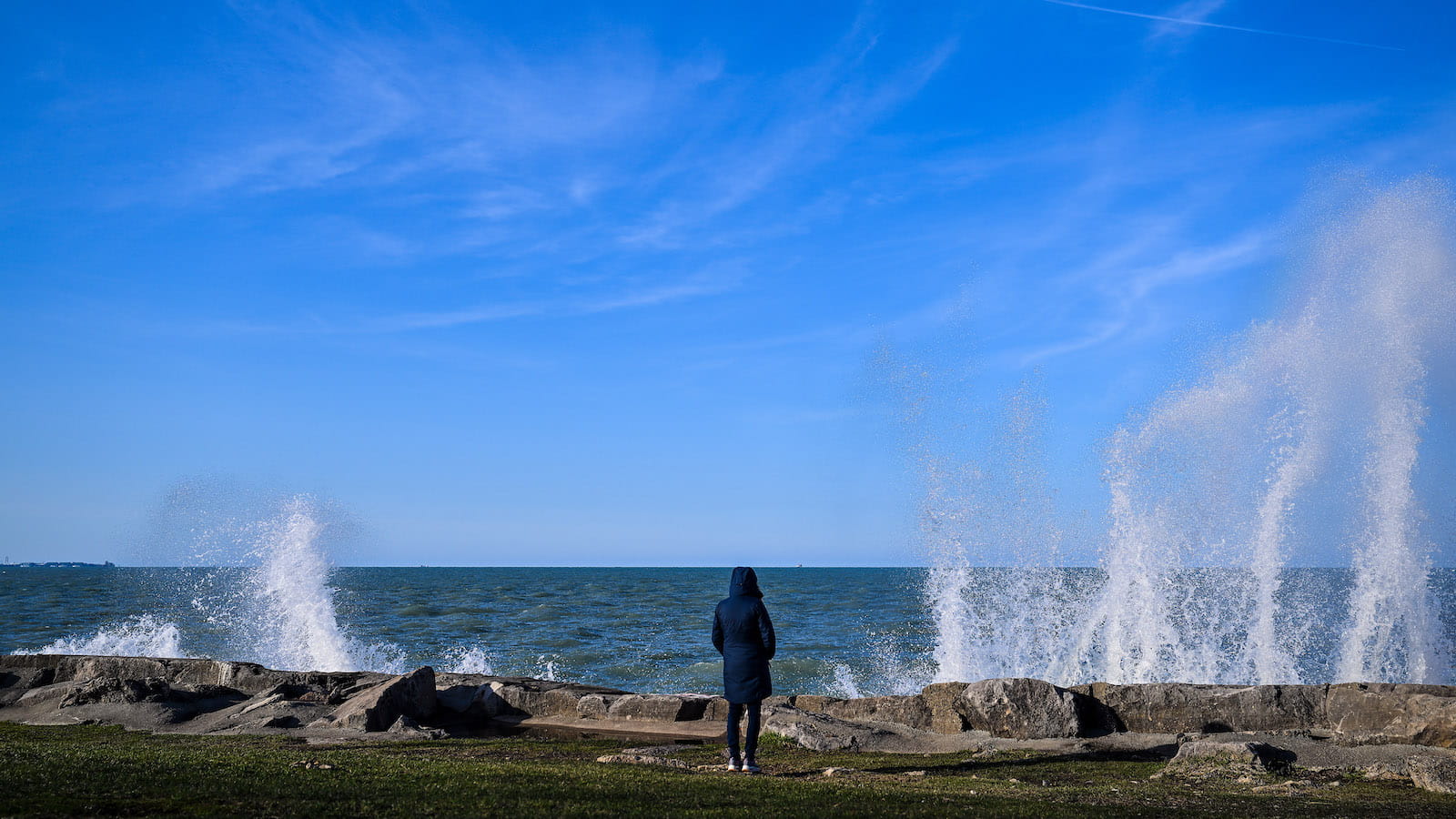
There are no wind turbines on the Great Lakes — and it isn’t for lack of wind.
This titanic network of interconnected freshwater lakes with a surface area larger than New England, New York, and New Jersey combined is theoretically ideal for wind farms. Winds sweeping across the lakes are stronger, more consistent, and less turbulent than those over land. The National Laboratory of the Rockies has estimated that the Great Lakes states have enough offshore wind potential to generate more than three times their combined annual electricity consumption.
The Great Lakes are ideal for wind energy. So where is it?
Bureaucratic hurdles and high costs have prevented the offshore wind industry from developing the Great Lakes’ abundant wind resources.
grist.org
Nuclear and hydro are good for base load and terrible for load tracking. Thermal is the nest we have for load tracking. Batteries may get there but equivalent capacity is still cost-prohibitive.Why ever would you care about solar in Canada with massive nuclear and hydro already doing clean heavy lifting and Quebec expanding hydro next door.
You don't need thermal in Ontario.
Great lakes wind is seriously under developed and with grid scale batteries plunging in price it makes lots of economic sense.
The Great Lakes are ideal for wind energy. So where is it?
Bureaucratic hurdles and high costs have prevented the offshore wind industry from developing the Great Lakes’ abundant wind resources.
The best part about solar is it is the easiest to provide distributed power. Lessens demand on generation and transmission. Again, batteries may get there but are currently one of the more expensive options (more expensive than buying grid power, more expensive than a backup generator, etc). Peak solar output is also closely tied with peak demand.
Obviously you have never lived near wind turbines. The whooshing noise easily enters your house and can be like Chinese water torture for many people. Each event causes no damage but the cumulative total and anticipation of the next event causes your brain to crack. Turbines also kill thousands of birds.
Everything is a trade off. There is no single best solution.

Battery cycling costs ~$0.15/kwh if you hope to pay off the battery before it is garbage. It works technically but financially, it's a rough go. I was running the numbers to see if ULO electricity plan plus a battery to supply power during on-peak periods but it was no Bueno. If I could build battery packs out of old ev's the numbers make sense but ESA killed that idea.I’d like to see new builds getting 20kw power walls subsidized. If they were $5k upgrade, they payoff in 5 years, lighten the load on thermal, and fully utilize wind and solar.
Might be cheaper than subsidizing more wind.
A subsidy of more than $15K with owner paying $5K is a bollocks program.
People living nearby complain the vibrations make them sick.Nuclear and hydro are good for base load and terrible for load tracking. Thermal is the nest we have for load tracking. Batteries may get there but equivalent capacity is still cost-prohibitive.
The best part about solar is it is the easiest to provide distributed power. Lessens demand on generation and transmission. Again, batteries may get there but are currently one of the more expensive options (more expensive than buying grid power, more expensive than a backup generator, etc). Peak solar output is also closely tied with peak demand.
Obviously you have never lived near wind turbines. The whooshing noise easily enters your house and can be like Chinese water torture for many people. Each event causes no damage but the cumulative total and anticipation of the next event causes your brain to crack. Turbines also kill thousands of birds.
Everything is a trade off. There is no single best solution.
I once ran a hydraulic jackhammer in a stairwell for a day. It worked well, powerful and very controllable. At the end of the day I was ready to puke.
There are thousands of wind turbines here and I've stood under them running and no I would not want to have them within 150m but the offset here is
Drive up to Erin and tell me you can hear a wind turbine from 1.5 km away.
Lake based makes the most sense and Lake Erie is very shallow.
Some of the turbines are insanely powerful and getting more so all the time.
Most complaints are either agitprop or flat out faked.Queensland, wind turbines are generally required to be set back at least 1.5 kilometers from existing or approved sensitive land uses like houses.
Drive up to Erin and tell me you can hear a wind turbine from 1.5 km away.
Lake based makes the most sense and Lake Erie is very shallow.
Some of the turbines are insanely powerful and getting more so all the time.
The world's most powerful wind turbine is the DEW-26 MW-310 offshore turbine by China's Dongfang Electric Corporation. Installed for testing in Dongying, Shandong, it features a record-breaking capacity of 26 megawatts (MW), a massive rotor diameter of 310 meters, and 153-meter-long blades. [1, 2, 3]
The race to build the biggest turbines continues to accelerate rapidly, with manufacturers primarily stationed in China and Europe. A breakdown of the top global giants and prototypes currently leading the industry includes: [1]
- Dongfang DEW-26 MW-310 (26 MW): The current undisputed global titleholder. This behemoth features 153-meter blades and sweeps an area of 77,000 square meters. Under standard medium-to-high winds, a single unit can generate 100 million kWh annually, easily powering around 55,000 households. [1, 2]
- Siemens Gamesa SG DD-276 (21.5 MW): Europe's most powerful prototype turbine. Installed at the Østerild test field in Denmark, it boasts a rotor diameter of 276 meters and can supply green electricity to about 70,000 Danish homes. [1, 2]
- Mingyang MySE 22MW: An upcoming offshore model targeting high-wind zones and floating foundations, sporting a rotor diameter exceeding 310 meters. [1]
- Mingyang OceanX (50 MW / Twin-Headed): Moving beyond single turbines, Ming Yang Smart Energy announced an OceanX model that features two counter-rotating 25 MW turbines mounted on a single Y-shaped floating platform to achieve a combined 50 MW capacity. [1]
- Sany SI-270150 (Onshore Record): Designed for land-based projects, this is the world's most powerful onshore turbine with a capacity of 15 MW and a 270-meter rotor diameter. [1]
Try being inside a house at 3am (especially with a temperature inversion). Completely different experience than standing beside your car.There are thousands of wind turbines here and I've stood under them running and no I would not want to have them within 150m but the offset here is
Most complaints are either agitprop or flat out faked.
Drive up to Erin and tell me you can hear a wind turbine from 1.5 km away.
Lake based makes the most sense and Lake Erie is very shallow.
Some of the turbines are insanely powerful and getting more so all the time.
Try drawing 1.5km setback circles in Ontario. You'll be well north of north bay before you place a single turbine. A lot of ontario turbines were placed at 550m.
I know someone who used to have a quiet house. Then the neighbour paved the driveway between the houses instead of leaving it mostly gravel. The solid connection between the houses lets them hear each other’s conversations.Try being inside a house at 3am (especially with a temperature inversion). Completely different experience than standing beside your car.
Try drawing 1.5km setback circles in Ontario. You'll be well north of north bay before you place a single turbine. A lot of ontario turbines were placed at 550m.
Not everyone is as susceptible to the same things. PTSD and food allergies used to be “all in the mind”
Awful lot of EXISTING wind FARMS south of North Bay.
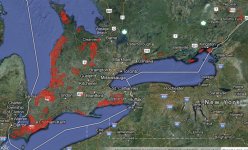
Here is the interactive map so you can tunnel in.

 ccsage.wordpress.com
Europe is in general far more densely populated than Ontario and they don't have a giant lake system untapped for wind.
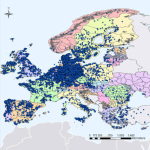
These are EXISTING windfarms....quityerbellyachin.
Wind and inexpensive grid scale batteries are an excellent path to netzero....fantasy NIMBY be damned.
Holland understands
Fossil fuel is dead - just annoying death throes remaining.....move on.
Using existing nuclear sites to build small nuclear is a good approach.
Here is the interactive map so you can tunnel in.
Map of Ontario wind turbine locations
Wayne Gulden has created a very useful map of Ontario’s wind turbine projects and turbine locations, which he will update as more data is obtained. It’s available here (but read the re…
ccsage.wordpress.com
Europe is in general far more densely populated than Ontario and they don't have a giant lake system untapped for wind.
These are EXISTING windfarms....quityerbellyachin.
Wind and inexpensive grid scale batteries are an excellent path to netzero....fantasy NIMBY be damned.
Holland understands
Holland is 41,500 sq km with 18 million people while S ontario is 114,000 km with 14 million people and Holland is the second largest food exporter in the world.Wind power is a primary source of clean electricity in the Netherlands, providing about 25% of the country's total power. Alongside solar, it has driven renewable sources to generate over half of the Dutch electricity supply
Fossil fuel is dead - just annoying death throes remaining.....move on.
Using existing nuclear sites to build small nuclear is a good approach.
But still $$$$$$Ontario is currently building the G7’s first grid-scale Small Modular Reactor (SMR) at the Darlington Nuclear Generating Station in Clarington
I would be more impressed if there wasn't wholesale corruption driving the system.Awful lot of EXISTING wind FARMS south of North Bay.
View attachment 79357
Here is the interactive map so you can tunnel in.
Map of Ontario wind turbine locations
Wayne Gulden has created a very useful map of Ontario’s wind turbine projects and turbine locations, which he will update as more data is obtained. It’s available here (but read the re…
Europe is in general far more densely populated than Ontario and they don't have a giant lake system untapped for wind.
View attachment 79358
These are EXISTING windfarms....quityerbellyachin.
Wind and inexpensive grid scale batteries are an excellent path to netzero....fantasy NIMBY be damned.
Holland understands
Holland is 41,500 sq km with 18 million people while S ontario is 114,000 km with 14 million people and Holland is the second largest food exporter in the world.
Fossil fuel is dead - just annoying death throes remaining.....move on.
Using existing nuclear sites to build small nuclear is a good approach.
But still $$$$$$
Your blind fanaticism is impairing your reading comprehension. You were talking about 1.5km setbacks being enough. Ontario didn't use 1500m setbacks for wind, they used 550m for most turbines. That allows a ton of turbines in southern Ontario (and a lot of ****** off people 551m from turbines).Awful lot of EXISTING wind FARMS south of North Bay.
View attachment 79357
Here is the interactive map so you can tunnel in.
Map of Ontario wind turbine locations
Wayne Gulden has created a very useful map of Ontario’s wind turbine projects and turbine locations, which he will update as more data is obtained. It’s available here (but read the re…
Europe is in general far more densely populated than Ontario and they don't have a giant lake system untapped for wind.
View attachment 79358
These are EXISTING windfarms....quityerbellyachin.
Wind and inexpensive grid scale batteries are an excellent path to netzero....fantasy NIMBY be damned.
Holland understands
Holland is 41,500 sq km with 18 million people while S ontario is 114,000 km with 14 million people and Holland is the second largest food exporter in the world.
Fossil fuel is dead - just annoying death throes remaining.....move on.
Using existing nuclear sites to build small nuclear is a good approach.
But still $$$$$$
As with most studies on things of this nature, they are financed (controlled) and released (at opportune times) by the governments.Your blind fanaticism is impairing your reading comprehension. You were talking about 1.5km setbacks being enough. Ontario didn't use 1500m setbacks for wind, they used 550m for most turbines. That allows a ton of turbines in southern Ontario (and a lot of ****** off people 551m from turbines).
Kind of timely.
cite?
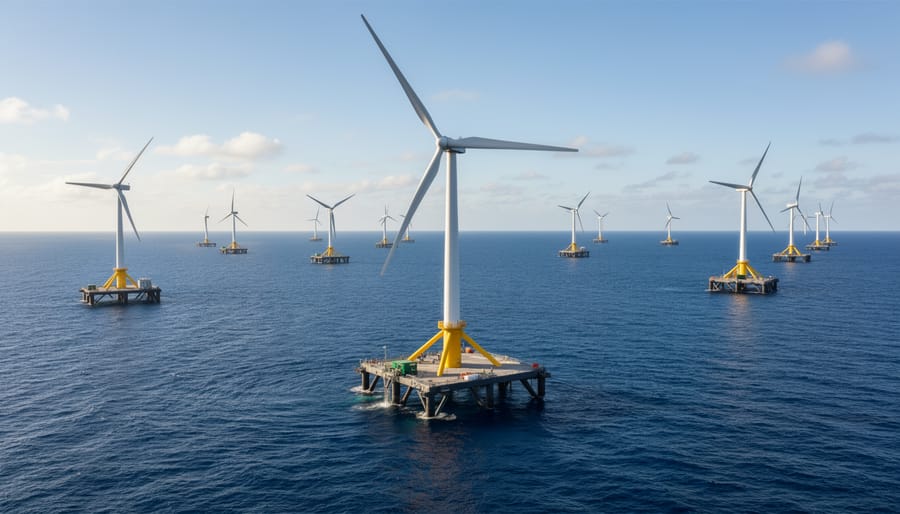
Wind Energy Is About to Change Everything (Here's What's Coming) - Ontario Energy News
Wind turbines stretching 300 meters into the sky—taller than the Eiffel Tower—will soon harvest energy from powerful offshore winds that current technology cannot reach. These next-generation installations represent just one breakthrough transforming wind energy from a supplementary power source...
www.ontarioenergyreport.ca
cite?
The courts disagree(and a lot of ****** off people 551m from turbines
In Ontario, individuals have not successfully sued operating wind farms for damages or permanent injunctions in court. While there have been dozens of lawsuits and administrative tribunal appeals regarding noise, health, and property value, courts and tribunals have consistently dismissed them due to a lack of recognized scientific and medical evidence. [1, 2, 3, 4]
Last edited:
Wind concerns ontario is a good place to start. Lots of scientific study too. Basically, most people within the shadow zone that aren't being paid to have the turbines there are ****** off.cite?
guzzirider
Well-known member
Wind power is clean but generates the most at night when we don't need it. We still need conventional plants online to cover the lulls in wind. Batteries may be a solution to cover the lulls but cost is rough by the time there is sufficient capacity and lifetime still ha a question mark. Build a natural gas or nuclear plant and the cost is crazy but you know it it reliable for many decades. How often do battery banks in support applications last? How much does it cost to replace the bank vs initial cost? I'm not saying there is a clear winner here but I suspect batteries will still be much higher. Maybe in another decade the math flips.
Capacity factor is also an issue on wind. To average the same output at that 405MW Nappanee plant, 1.2GW of wind and backup batteries would be needed. Anyone comparing costs just based on the nameplate capacity is either being disingenuous or intentionally obtuse.




